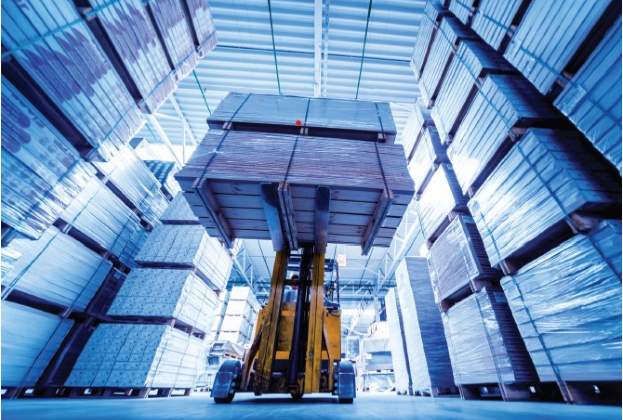
While interest rates remain high and inflationary pressures persist, landlords and developers are seen pursuing this path of asset enhancement for technologically dated structures. This trend will continue while the outlook for the global economy remains weak in 2024, as industrial property owners seek to differentiate themselves in a crowded market.
2.Stronger demand and tighter supply for high-quality, high-specification industrial property.
Singapore’s struggles in manufacturing in 2023 are expected to continue in 2024, as the global economy attempts to regain its footing. Easing inflation and improved supply chain conditions will likely first deliver gains in high-value manufacturing, including semiconductor manufacturing boosted by innovations in artificial intelligence and cloud computing.
The Q1 Industrial Briefing also highlighted the flight-to-quality trend amongst tenants across global markets and taking place almost regardless of sector, with businesses opting for high-quality, high-specs real estate.
This has led to multiple-user factory vacancies staying at 10-year lows of 9.5%, flat QoQ. The vacancy rate for warehouse space climbed by 0.5 of a ppt QoQ to 8.9% in Q1.
With a slew of new developments (2.4 million sq ft multiple user factory GFA, 4.2 million sq ft warehouse GFA) in the pipeline this year, this should lend support to both prices and rental rates for industrial space in the coming years. Savills forecasts industrial rents to grow 0% to 3% in 2024.
A Relatively Healthy Market but It’s Important to Pick Your Spots
Singapore’s industrial property has been one of the most resilient segments of its real estate market owing to the nation’s regional trading and business hub status. The reliable infrastructure and a stable business climate provided by Singapore to locators will continue to attract investments in the industrial sector, as it has been doing so over the past decades.
The industrial property market benefits from a proven long-term urban planning approach by the URA aimed at sustainable development that can adapt to changes in the global economic landscape. The supply of land is controlled based on what the URA deems is necessary to foster to continued healthy development of the market.
Buyers and sellers should note that the best areas to be in the industrial property sector for the short- and medium-term are those benefiting from these two trends.
One is the expected increase in supply of leasable industrial space over the next 12 to 24 months, which is expected to keep prices and rental rates stable overall. The second is the trend of tenants seeking higher-spec, higher-quality industrial spaces capable of accommodating high-value industries.
Focusing on these areas in the industrial property market should help investors weather the weaker short-term business climate while positioning themselves for better returns in the coming 2 to 3 years.
1https://www.mingtiandi.com/real-estate/research-policy/singapore-rolls-out-biggest-industrial-land-sale-plan-in-a-decade/
2https://tablebuilder.singstat.gov.sg/table/TS/M212181#!


.jpg "Image treatment")

.jpg "Image treatment")
(1).png)
(1).png)
.jpg)
.jpg)


.jpg)
(1).jpg)
.jpg)